

Why choose wrap-around packaging for your products?
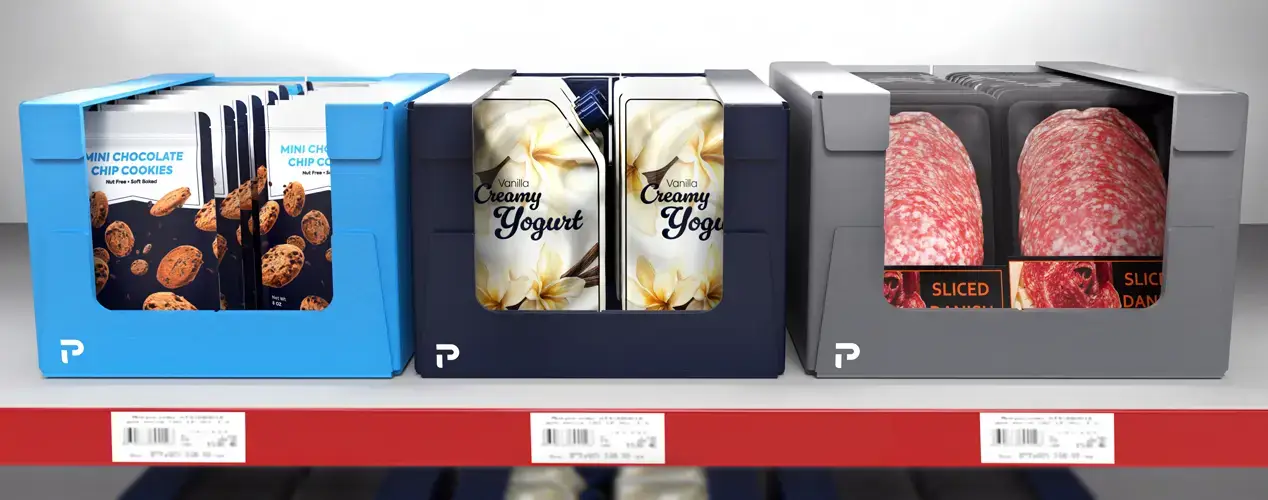
In today’s fast-moving manufacturing and retail world, choosing the right packaging format is more critical than ever. Rising material costs, evolving retailer demands, and growing sustainability pressures mean brands can’t afford outdated solutions.
Wrap-around packaging is a smart choice for better product protection, optimized shipping, and greater shelf appeal. Discover how this approach addresses key industry challenges—boosting efficiency, flexibility, and sustainability across your supply chain.
What is wrap-around packaging?
Unlike traditional top-load cases, wrap-around packaging is created by folding and gluing a single corrugated blank directly around the products. The result is a secure, compact case that is both efficient to produce and visually appealing on store shelves, with consistently superior geometry.
The key benefits of wrap-around packaging
1. Superior product protection
Product damage can occur at multiple points in the supply chain—whether due to inadequate packaging during production, mishandling during transit, storage, or at the store, or incorrect placement of products within the boxes. Every instance of product loss is costly, impacting both profitability and brand reputation.
Wrap-around packaging consistently delivers a perfect box: stacking well, palletizing efficiently, shipping securely, and reaching the shelf in optimal condition. This elevated level of protection safeguards your product at every stage of the supply chain.
As LEGACY Supply Chain points out, damaged packaging or products are among the most common reasons for incurring retailer chargeback fees. Retailers expect products to arrive in pristine condition, ready to go directly onto shelves. Any damages not only delays restocking but also results in disappointed customers.
In addition, as highlighted by Inriver, chargebacks due to damage not only include the direct cost of the fee but also the expense of correcting the error, such as writing off or reshipping goods. Persistent shipment compliance errors may even jeopardize your relationship with key retailers, compounding the financial impact over time.
2. Lower material and shipping costs
Wrap-around packaging uses less corrugated material compared to traditional RSC (Regular Slotted Case) designs. This results in lower material expenses, lighter shipments, and therefore reduced shipping costs—a direct boost to your bottom line.
For over twenty years, the price of cardboard has been steadily rising. According to the Producer Price Index (PPI), the cost of corrugated cardboard has more than doubled between 2000 and 2025, increasing from 190 to 425. This inflation significantly impacts company margins and is prompting the industry to innovate in order to maintain profitability (FRED - Federal Reserve Economic Data).
Moreover, wrap-around packaging makes it possible to build perfectly stable and geometrically uniform pallets. Therefore, this increased load stability allows for more efficient truck loading: more cases per pallet and per truck, less wasted space, and reduced risk of loads shifting during transit. This maximizes available space, further reducing logistics costs and enhancing overall supply chain efficiency.

3. Exceptional flexibility
Wrap-around packaging is compatible with a wide variety of product formats, including sachets, doypacks, flowpacks, cheese boxes, film-wrapped products, and trays. Whether you are packaging baked goods, dairy products, or cold cuts, this method can easily be adapted to your entire product line.
Different retail channels, such as club stores, superstores, and discount markets, often have distinct format requirements. This means the same product may need to be offered in various sizes and bundled pack formats. Adapting packaging to meet these diverse needs can translate into additional costs for operations and packaging equipment, especially since packing machines are typically a long-term investment and complex to adapt or replace.
Wrap-around packaging provides manufacturers with the versatility needed to serve multiple markets efficiently, helping to reduce complexity, control costs, and keep operations agile. Its adaptability and fast changeover capabilities make it easy to keep up with evolving packaging trends and ensure production is future-proof.
4. Added value of shelf-ready packaging
Shelf-ready wrap-around packaging delivers both striking shelf impact and practical benefits for retailers and manufacturers.
Branding that sells
Shelf-ready packaging is more than just utility packaging; it’s your brand’s advertising canvas in-store. Embracing a fully branded display grabs attention and encourages consumer interaction. The importance of branded packaging remains high regardless of the store format, but its role adapts depending on the retail environment:
- High-Assortment Environments (e.g., Walmart Supercenters, 200,000+ SKUs): Branded packaging is essential for cutting through the “visual noise” of crowded shelves. Only products with bold, distinctive branding, clear logos, vibrant colors, and compelling messages, can quickly grab shoppers' attention and influence their purchasing choices.
- Limited-Selection Environments (e.g., Costco, ~4,000 SKUs): With less competition on the shelf, each product receives more focused attention from shoppers. Here, branded packaging must quickly establish trust, explain the value proposition, and help the product “own” its category.

In any scenario, branded packaging does far more than contain your product—it informs, reassures, differentiates, and directly influences customer decisions, regardless of store type or SKU count.

Product protection, food safety & shelf life
According to a survey of US customers, food safety and shelf life remain the most important product characteristics. These “nonnegotiable” factors are closely linked to perceptions of quality and price in purchasing decisions. For example, a long shelf life not only reassures shoppers but also helps minimize waste and prevent additional costs (Mckinsey).
Shelf-ready packaging (SRP) supports these priorities by protecting products throughout the supply chain, reducing unnecessary handling, and maintaining product integrity on the shelf. By safeguarding both safety and freshness, well-designed packaging helps retailers and shoppers alike meet their highest standards for quality and value.
Efficiency in store operations
A well-designed SRP requires little setup for staff to restock shelves, which can significantly cut down labor costs—a major reason why retailers increasingly demand SRP from their suppliers. Because SRP is designed to go straight onto shelves with minimal handling, it reduces the time and effort needed for restocking. This allows retailers to reallocate labor toward enhancing the customer experience and focus on other vital operational tasks (Shipmaster).
With ongoing labor shortages and constant pressure to improve margin ratios, efficient shelf-ready packaging is more important than ever. Products simply placed in unbranded secondary packaging on shelves often appear neglected and less visible to buyers. Without SRP, employees may need to tear boxes by hand or use box cutters, raising the risk of injury and further reducing operational efficiency.
5. Sustainability that pays off
By optimizing material use and case size, wrap-around packaging helps reduce your carbon footprint. This solution not only decreases material waste and optimizes pallet loads but also aligns with growing consumer demand for environmentally responsible packaging.
The rejection or return of damaged pallets by retailers doesn’t just lead to financial losses—it also generates significant waste, both in products and packaging, with a tangible impact on the environment. Better protection and reduced handling mean fewer rejected products, less waste, and fewer resources consumed throughout the supply chain.
The scale of the challenge is clear:
- In 2022, supermarkets and the retail sector generated an estimated 131 million tons of food waste globally (Statista).
- According to the United Nations, about 13% of the world’s food is lost in the supply chain from post-harvest up to the retail stage.
- In the coming years, retailers are likely to place increasing emphasis on reducing food and packaging waste, both throughout the supply chain and within stores (IGD).
By reducing product damage and material use, wrap-around packaging is a key strategy for manufacturers and retailers aiming to protect the environment—and their bottom line.
The smart choice for modern production lines
Choosing wrap-around packaging isn’t just about changing your box format—it’s about elevating your entire packaging operation. The CPW Series Case Packer from Premier Tech delivers the automation and precision needed to bring these benefits to life.
Engineered for reliability and adaptability, the CPW seamlessly integrates wrap-around packaging into your production line. Its single pick, single drop approach gives you total flexibility and creativity in how your product is organized within each case. Whether you need to pack boxes, thermoformed trays, cups, bags, pouches, or doypacks, the system adjusts effortlessly to your requirements. Quick and easy changeovers require no additional tooling, so your equipment evolves alongside your production needs.
With its all-in-one design, the CPW Series integrates smoothly into your packaging line, ensuring consistent case quality, minimal downtime, and sustained efficiency gains. Its adaptability and fast changeover capabilities also make it easy to keep up with evolving packaging trends and ensure your production is truly future-proof.

Final thoughts
As manufacturers and retailers face mounting pressures for cost control, operational efficiency, and sustainability, wrap-around packaging stands out as a game-changing strategy. It guards against damage, streamlines logistics, meets the strictest retail requirements, and supports greener operations—without sacrificing shelf impact.
The future belongs to businesses ready to innovate at every link in their value chain. By integrating wrap-around packaging and proven automation solutions like the CPW Series Case Packer by Premier Tech, you invest not just in a box, but in the resilience, adaptability, and success of your entire operation.
Ready to take your packaging performance to the next level?
Discover how the CPW Series Wrap-Around Case Packer can transform your case packing operations.
